

Finally….. our day in Tbilisi! This was supposed to happen on our first day here, but two days were flipped. Traffic is bad on Sundays outside the city because so many people leave on weekends. Our guide said she previously sat in traffic for hours, adding a half day to the drive. Additionally, museums in Tbilisi give priority to school kids, so we would have not only been at the back of the line but we would have been surrounded by mobs of kids. So glad our guide took all of this into account!
First we have to mention the rain. It rained in the area overnight, more than we realized until we saw that the flowing river had turned into a muddy churning river. It continued to rain throughout the day, but it didn’t ruin the day.
Despite saying this was our day in Tbilisi, we first headed out of the City on a very misty, hard to see anything morning, to our first stop, Jvari Temple.
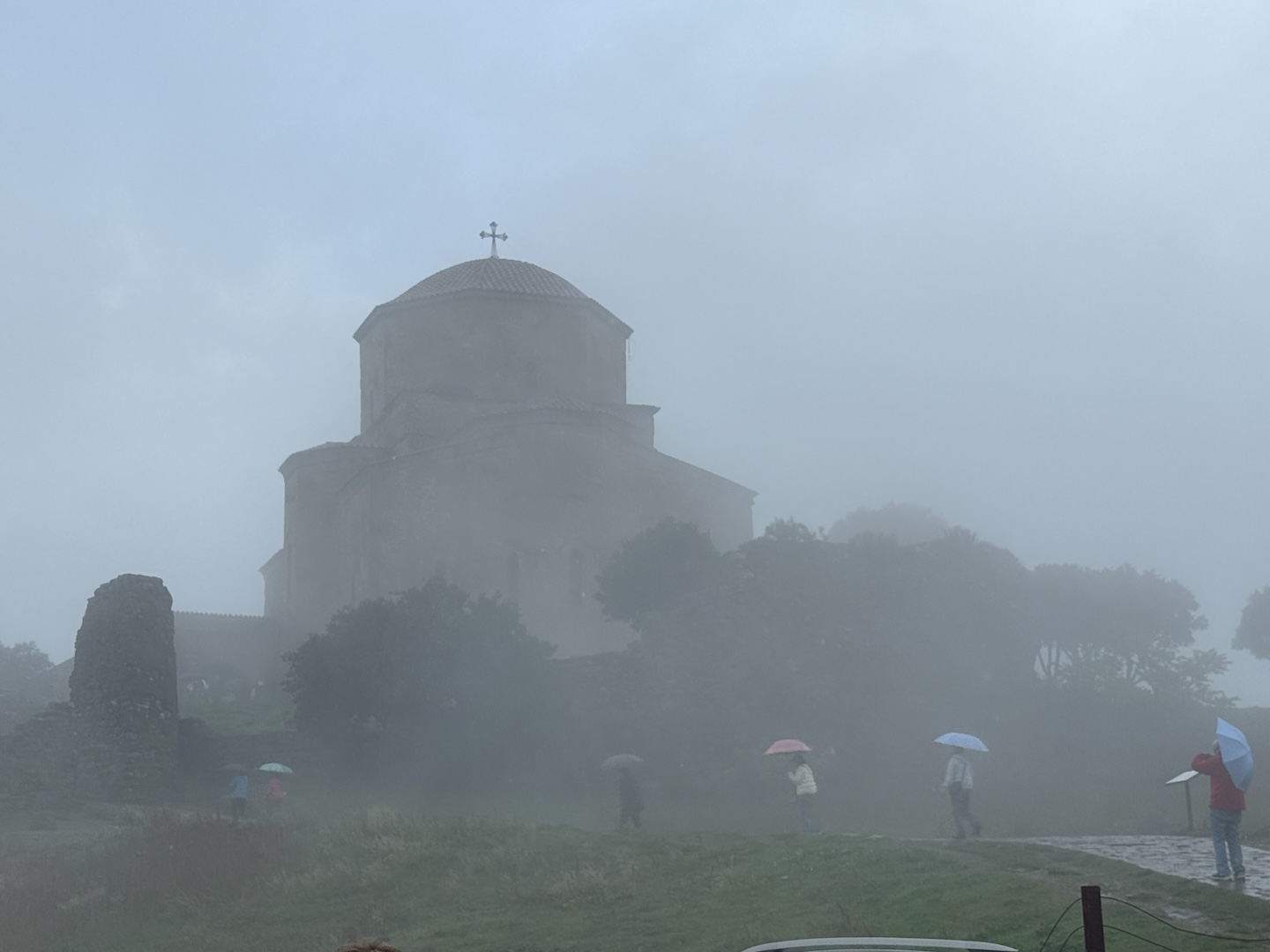
This temple is at the top of a hill over looking the confluence of the rivers Kura and Aragvi. Being Sunday morning, the temple was in session, so while you could go in and take a look from the edge, active worship was going on. As we were there, the clouds/fog that covered the entire valley area started clearing so that we could just start to see the rivers below.


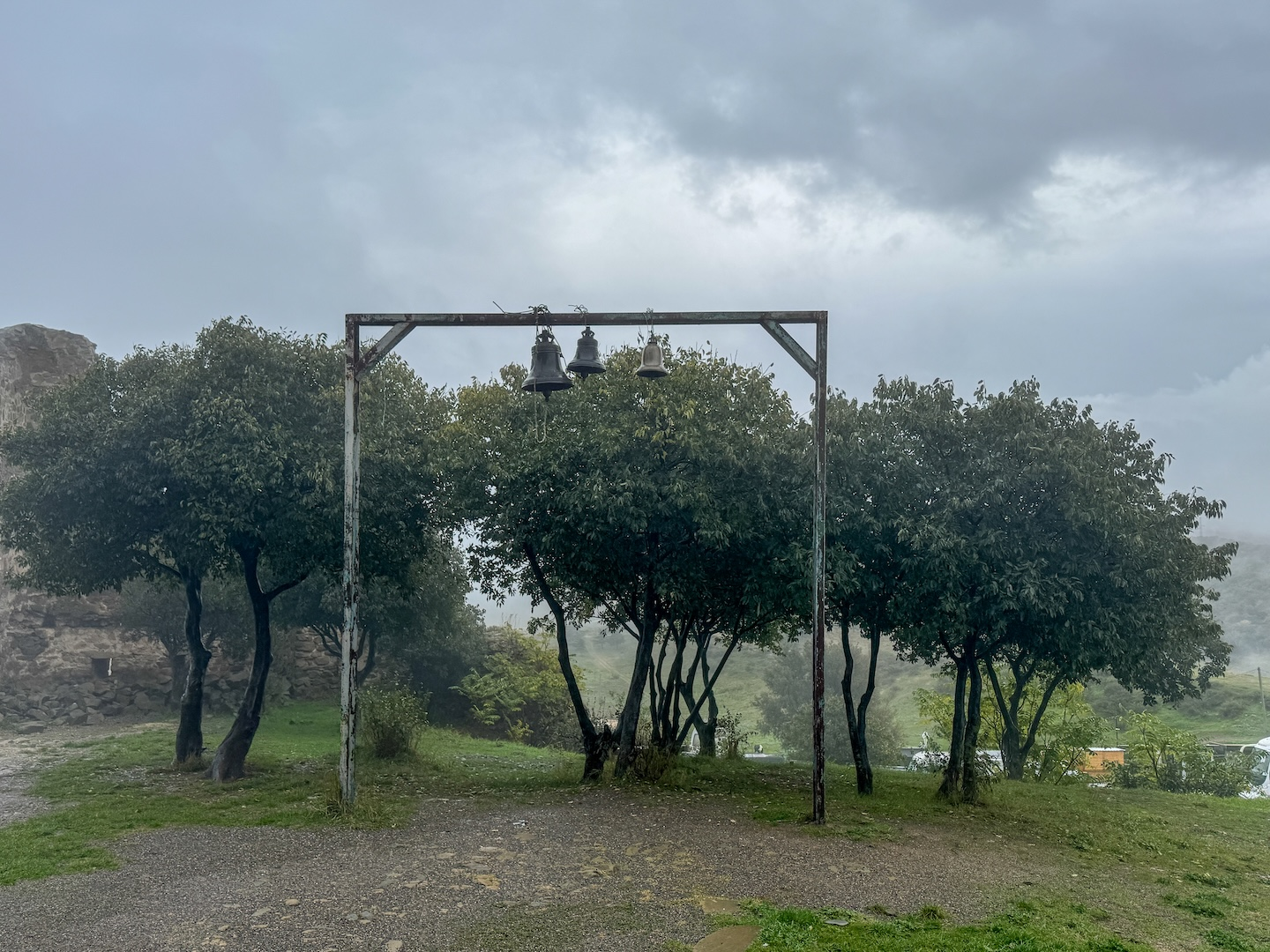
When we first arrived:

And when after having been there about 20 minutes:
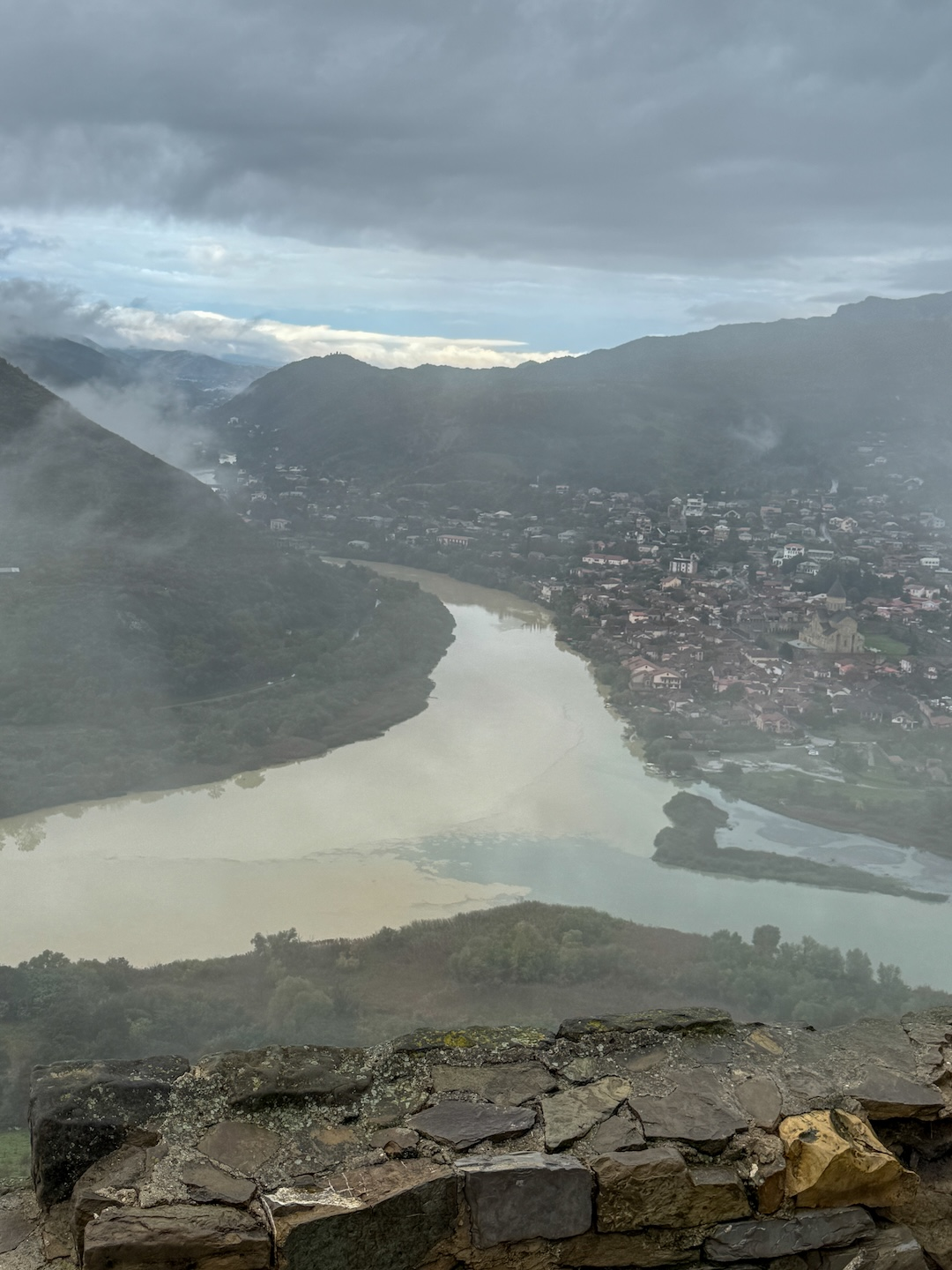
After leaving the temple, we wound back down the hill and crossed over (one of the rivers), driving alongside the far-side to the old capital of Georgia, Mtskheta. Mtskheta was the capital from the 3rd Century B.C. to the 5th Century A.D.
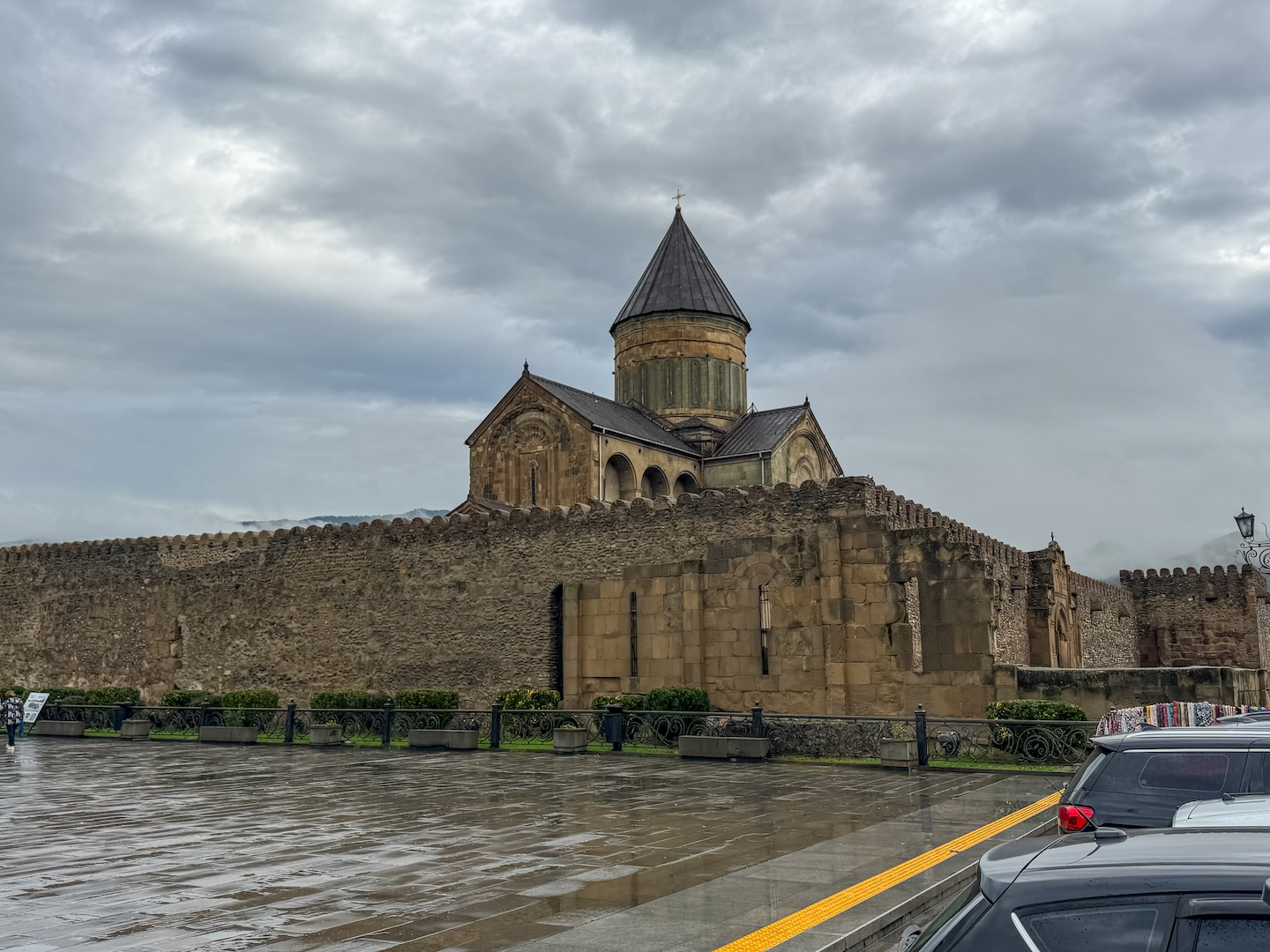
The town is still considered the religious center of Georgia, boasting an 11th Century Cathedral, Svetinskhoveli, as the center for religion. Walking down a quiet little street, with just a few of the town dogs to keep us company, we came to the Cathedral walls and entered the compound.


The cathedral was also in use, with a guardian priest manning the red rope gate keeping large groups of folks out. (They told us you would be let in one or two at a time, but we didn’t test this, as we didn’t want to intrude on their service.)
Here are some photos from around the compound.

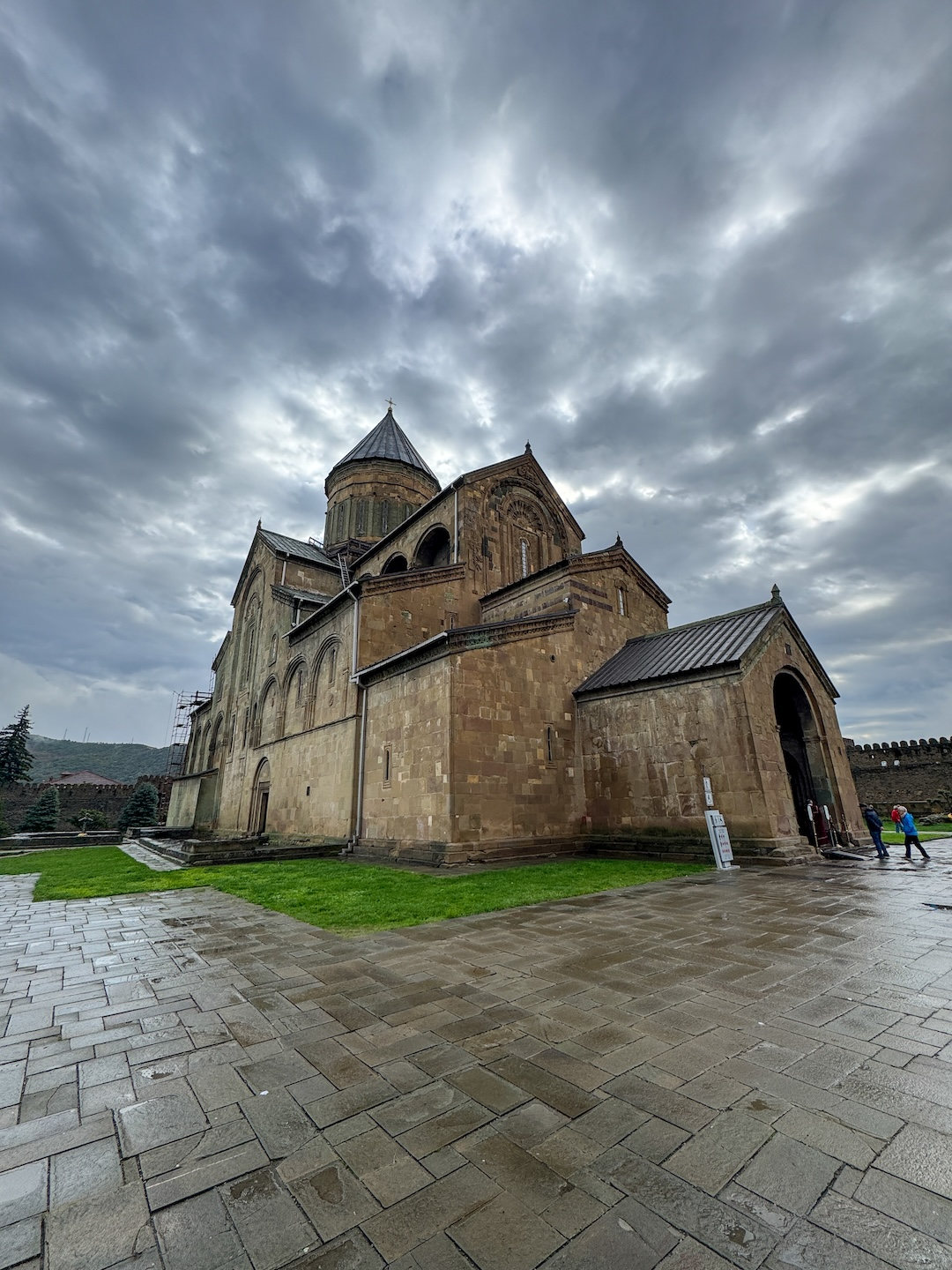
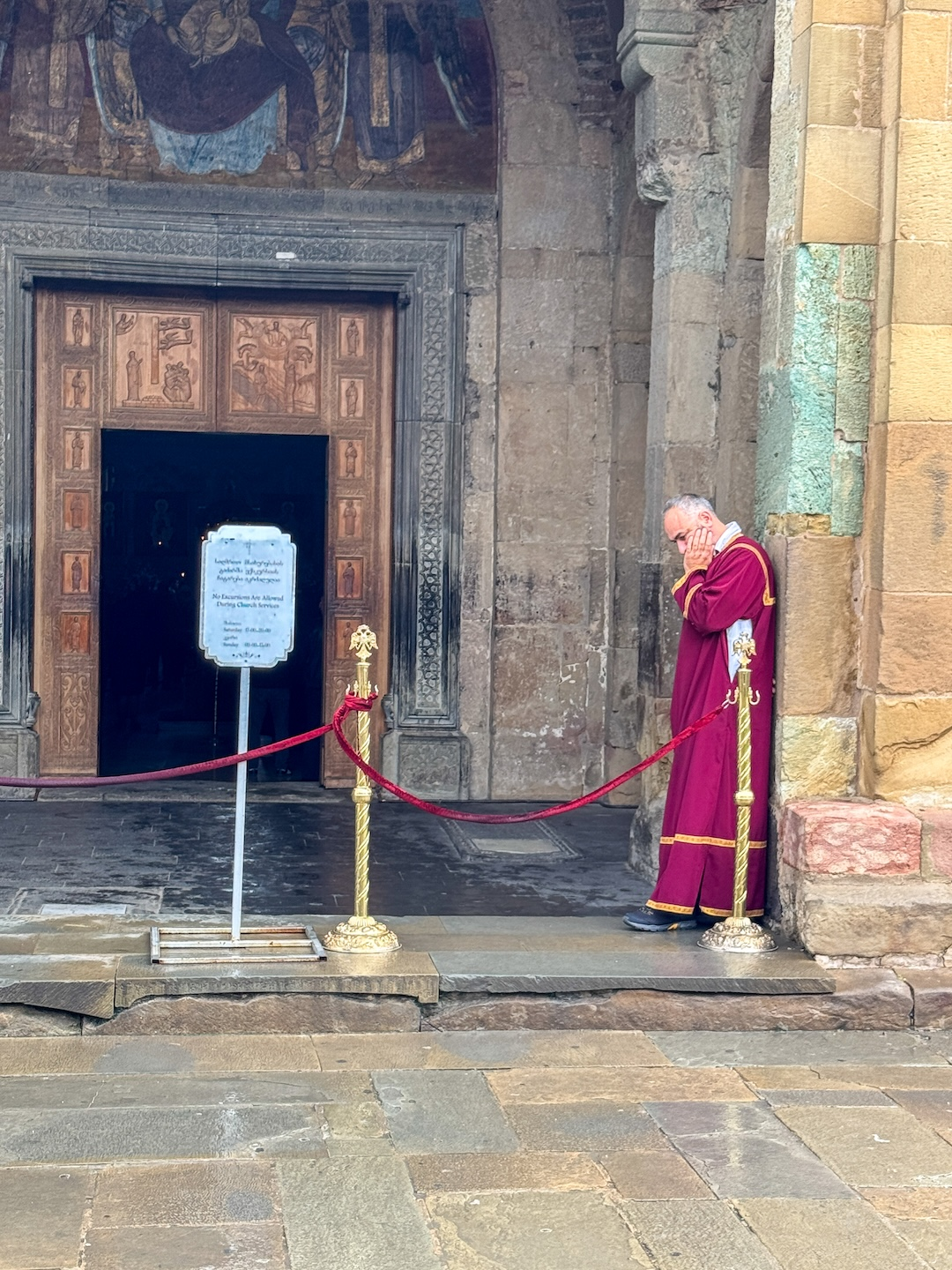


After seeing Svetinskhoveli, we boarded the bus and headed back into Tbilisi, and headed to Assumption Church (partially in service, as we were a little later, and we were able to get in and see the church, albeit there were still worshipers coming and going), high on a hill in Tbilisi overlooking the river.


After taking in Assumption Church, we next walked to the hot springs area of town. This necessitates a little story. Before Tbilisi was the capital, the King was out hunting, and after shooting a bird (duck/goose/something with feathers), he found it boiled and cooked. They discovered that it had fallen into a hot spring and cooked. It was around then that they decided to move the capital of Georgia to Tbilisi.
You could definitely smell sulfur in the air, making those who know what El Dorado Springs smelled like somewhat nostalgic. Walking along a combination of boardwalk and water-side trail, we walked back until we found a beautiful waterfall.

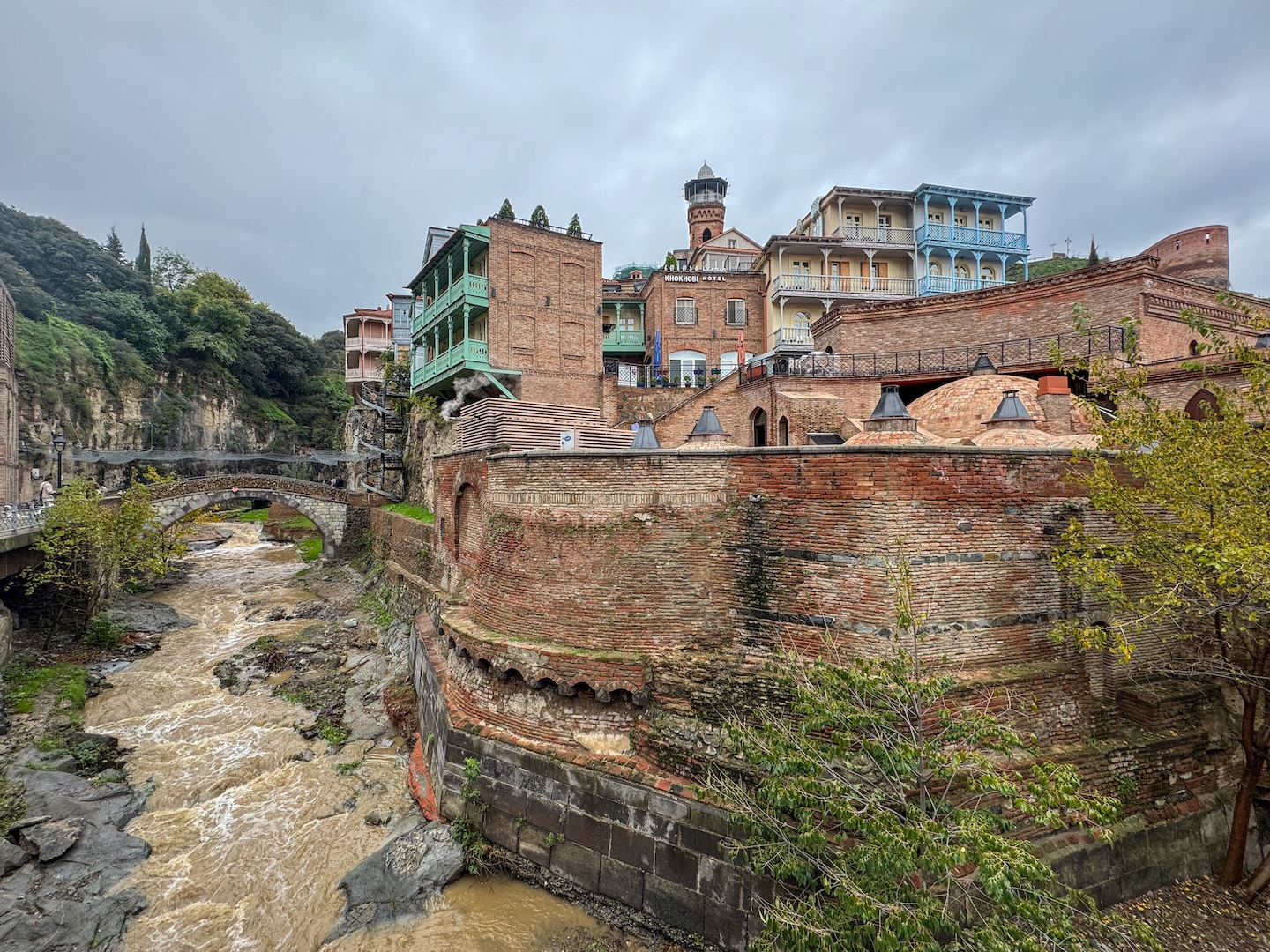


From the waterfall, we climbed up (stairs throughout several buildings, including a metal spiral stair), until we were well above the waterfall, and on Botanical Gardens road. Walking down the road, we stopped in at Juma Mosque, a famous mosque. At the bottom of the street, we entered an underground shopping area, which was a tunnel that let you cross a major intersection safely, before continuing on to Shardeni Street.
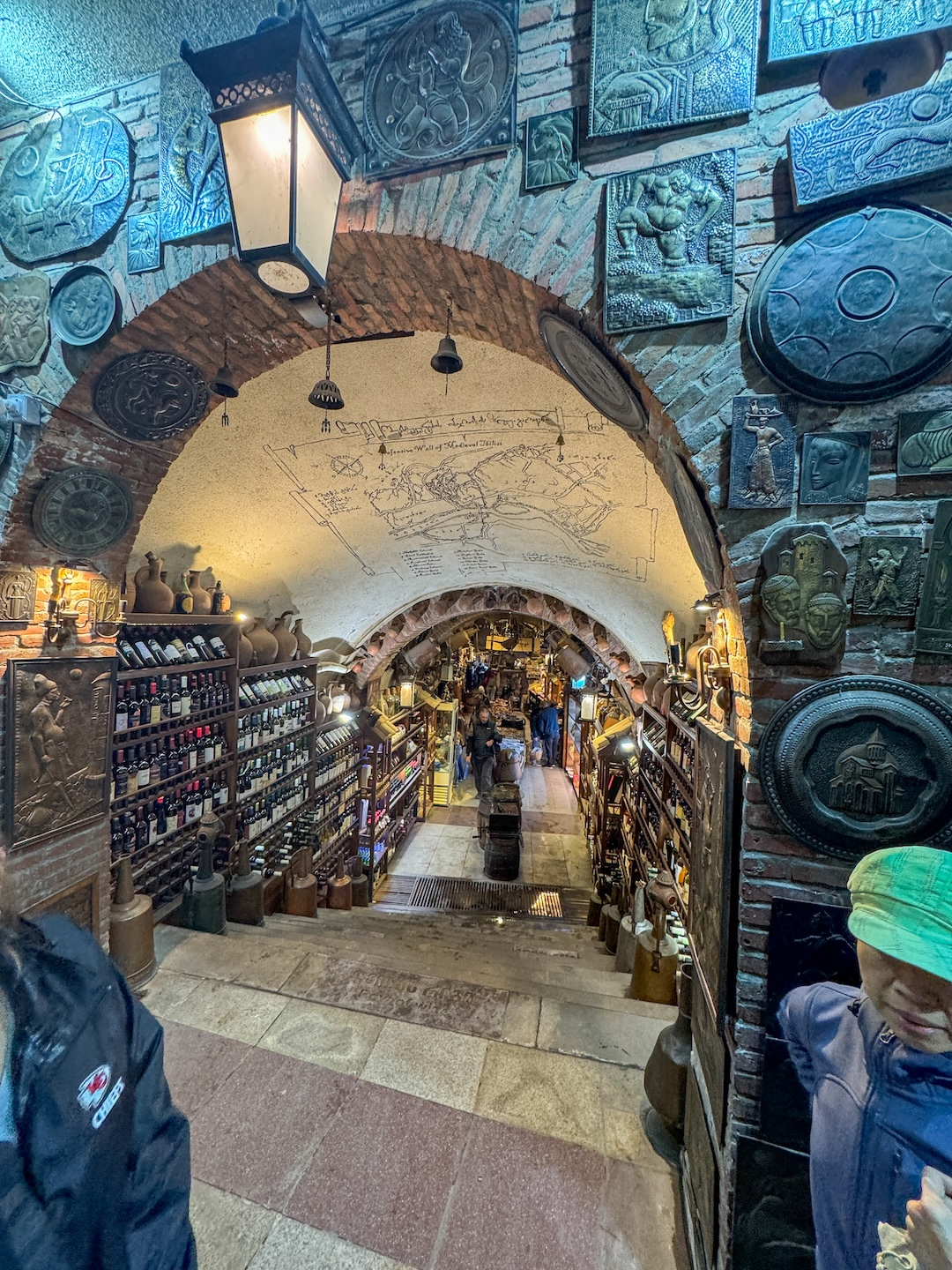

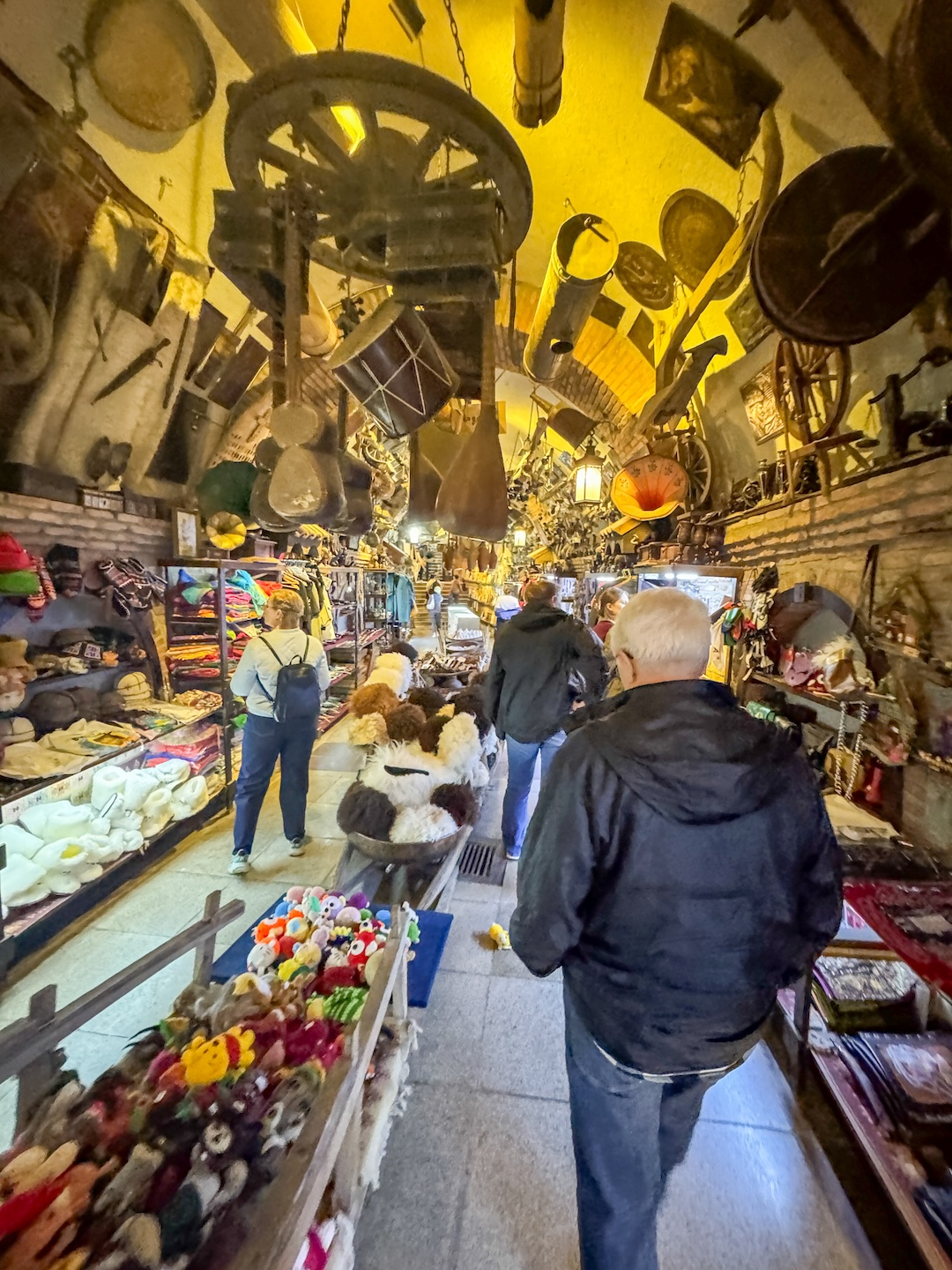
This street was named after a French traveller (Jean Chardin), and had an architecture resembling Paris, with cafe’s, boutiques, and galleries. All very picturesque.

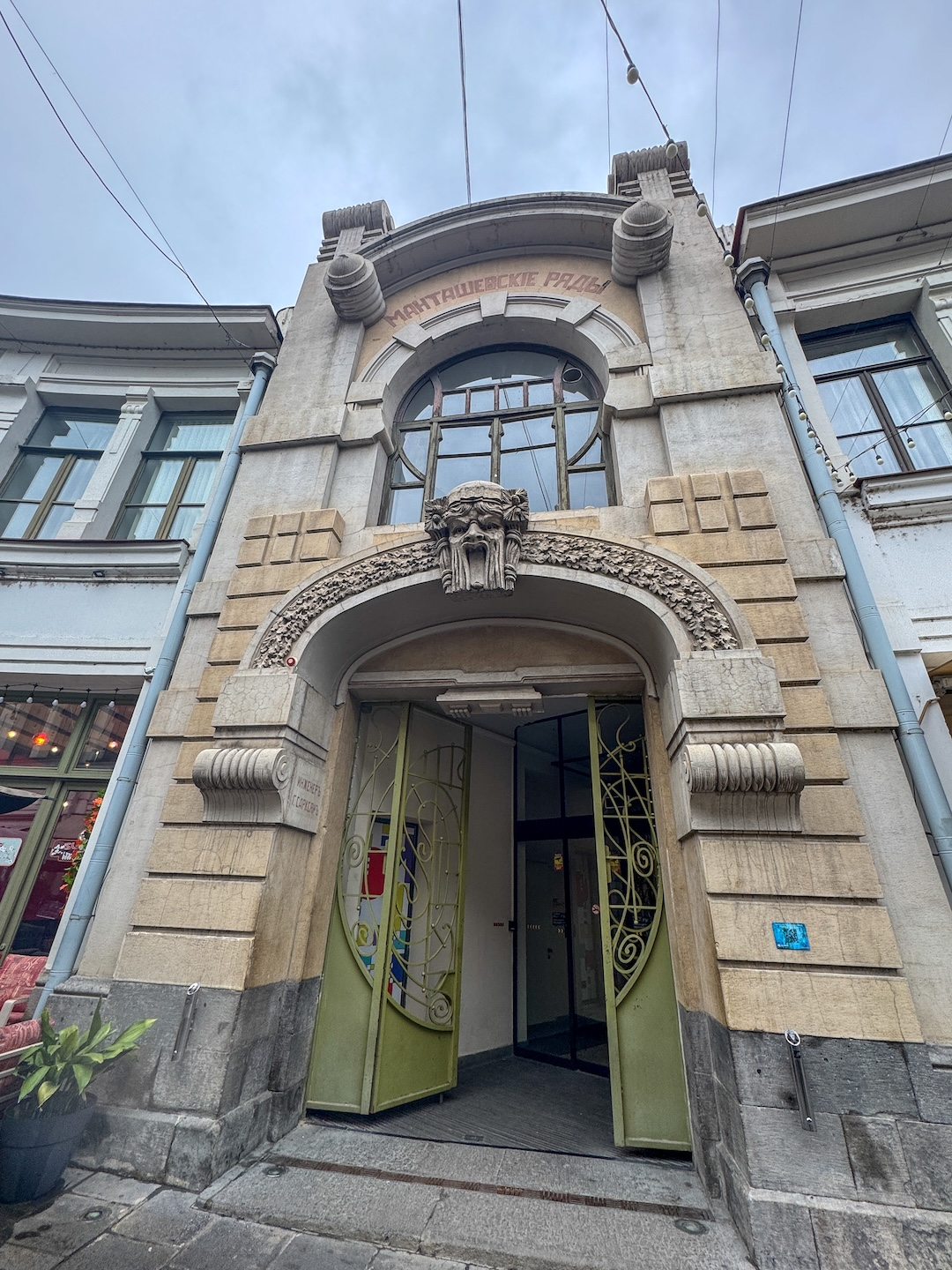
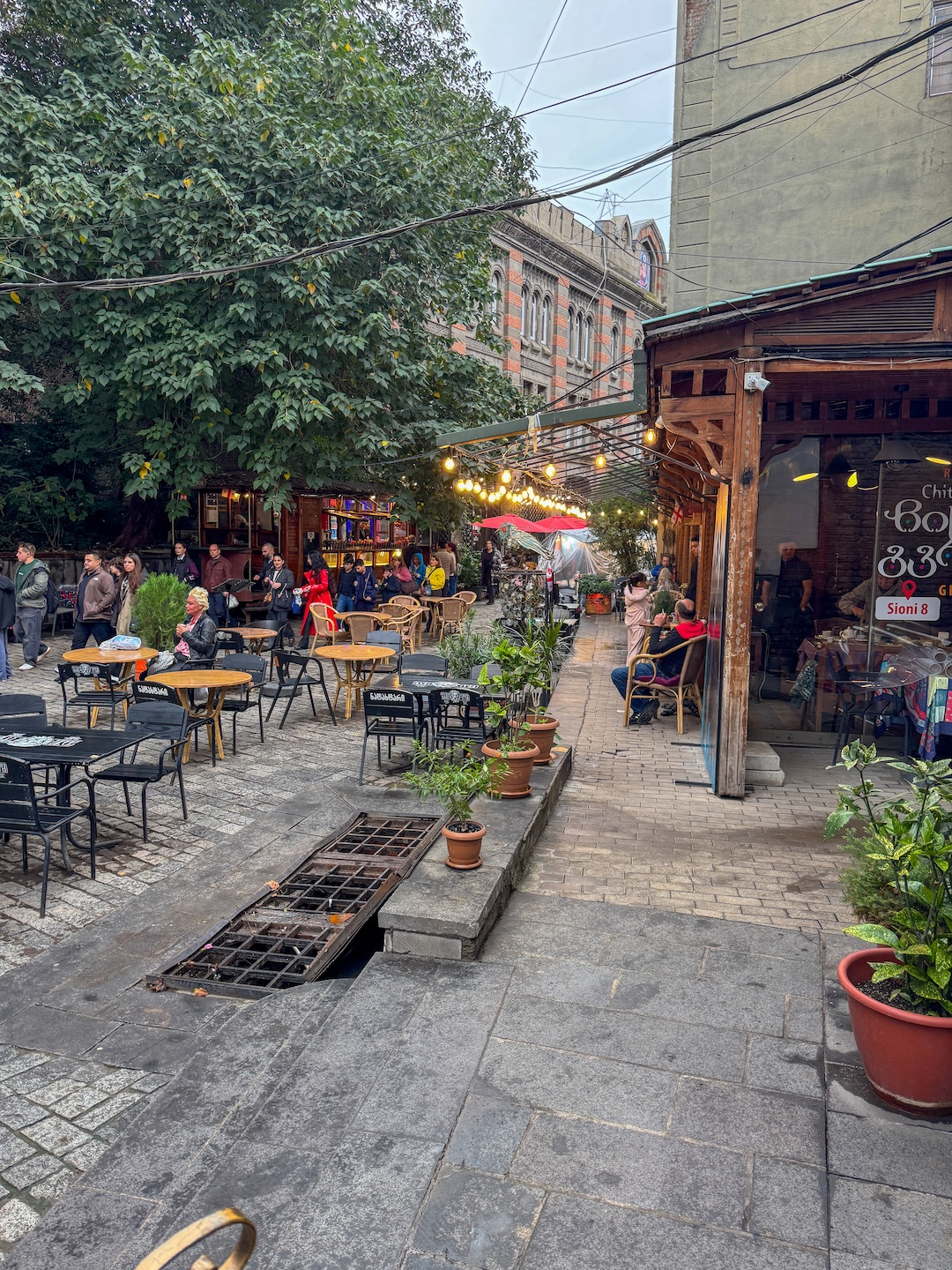
After exploring this street, we walked to, and across, the Bridge of Peace, a spectacular bridge and famous land-mark designed by an Italian architect, crossing over the river.


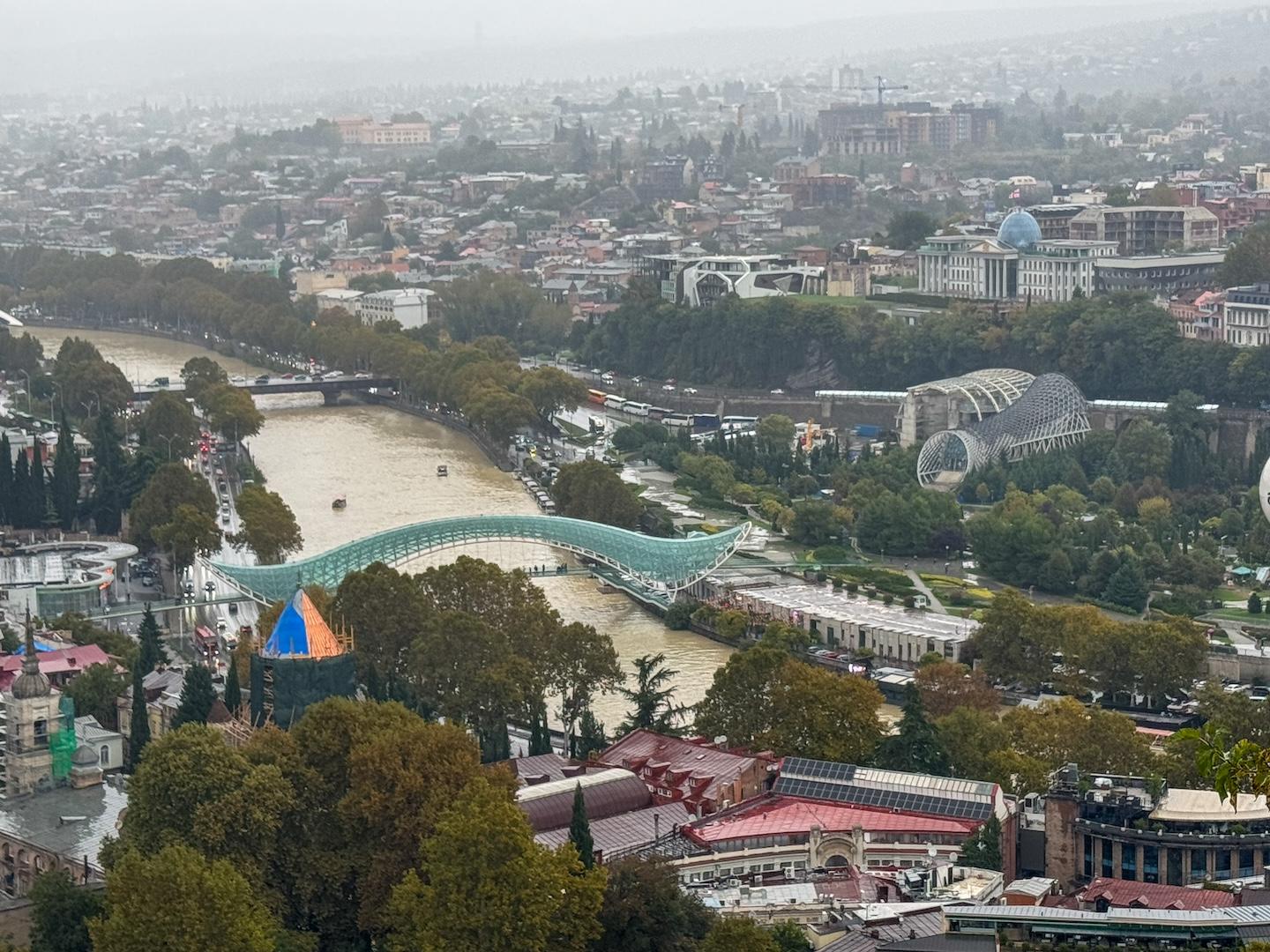
From the Bridge of Piece, we walked into the City park to the lower entrance of the Sky Tram, taking it up to the cliff-side top, where we were able to walk up and get a close-up look at the statue of “The Mother of Georgia”. We then retraced our steps back to the tram station, and rode the tram back down to the City park.

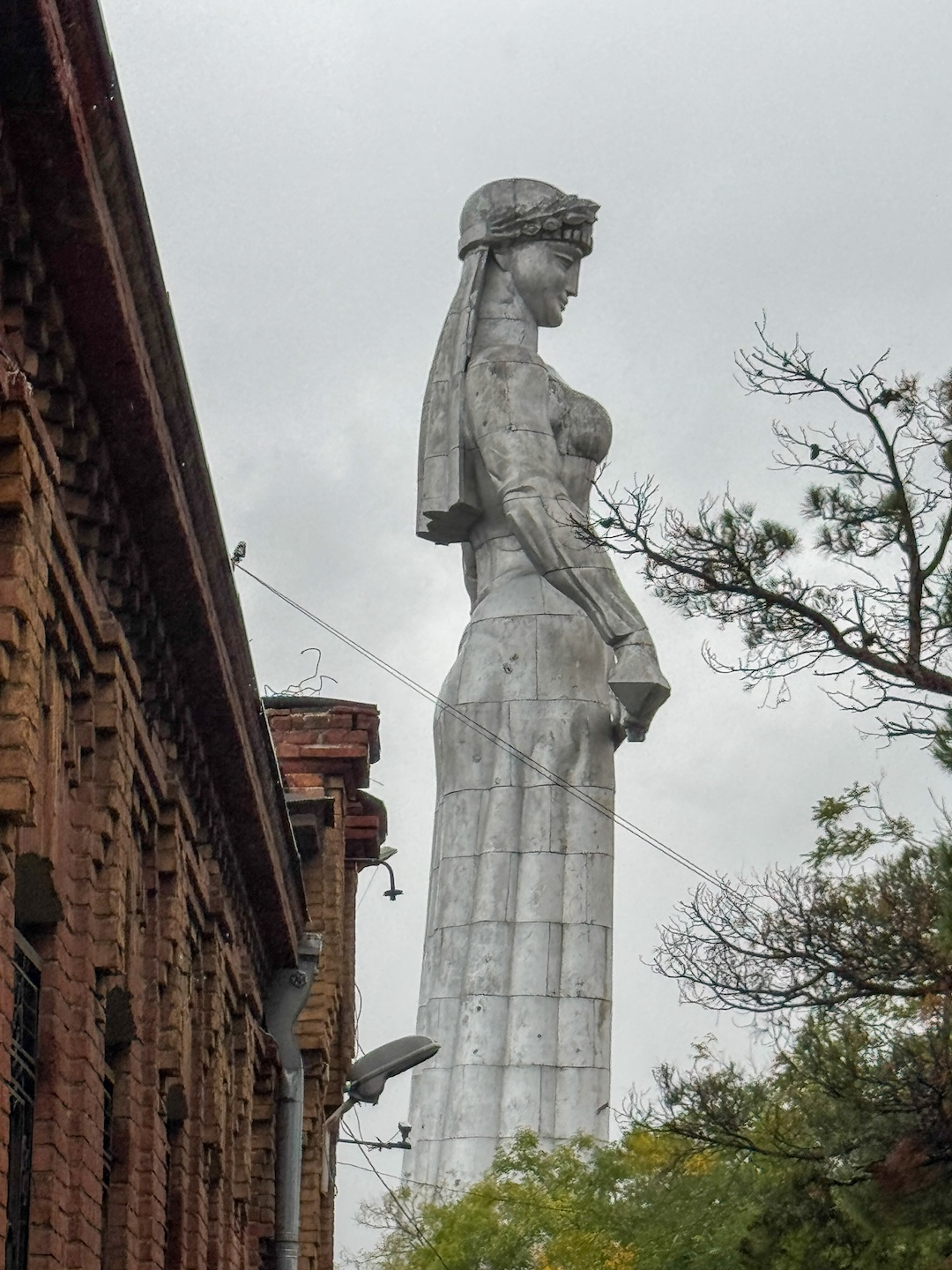

From here we walked over to the edge of the park, where our bus was waiting to pick us up, and took us
After a long day, we walked back down to the open festival area, walking around and looking first at the vendors, and then the incredible and bustling flower market, before settling on a little Pizzaria and eating Pizza for dinner followed by baklava again next door.
Leave a reply